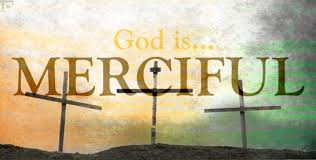
 Love has been perfected among us in this: that we may have boldness on the day of judgment, because as he is, so are we in this world. There is no fear in love, but perfect love casts out fear; for fear has to do with punishment, and whoever fears has not reached perfection in love. We love because he first loved us. Those who say, “I love God,” and hate their brothers or sisters, are liars; for those who do not love a brother or sister whom they have seen, cannot love God whom they have not seen. The commandment we have from him is this: those who love God must love their brothers and sisters also. (1Jn 4:17-21)
O LORD, I have heard your speech and was afraid; O LORD, revive Your work in the midst of the years! In the midst of the years make it known; In wrath remember mercy. (Hab 3:2 NKJ)
The parable of the Good Samaritan is a revelation of God in a word that has great importance through all the Scriptures from beginning to the end. It is a revelation of what the prophet Hosea says, speaking for the invisible God, “I will have mercy and not sacrifices.” What is this mercy which we find spoken everywhere in the Scriptures, and especially in the Psalms? The Vulgate[i] rings with misericordia (mercy in Latin) as though with a deep church bell. Mercy is the “burden” or the “bourdon,” it is the brass bell and under-song of the whole Bible. But the Hebrew word— chesed— which we render as mercy, misericordia, says more still than mercy. Chesed (mercy) is also fidelity; it is also strength. It is the faithful, the indefectible mercy of God. It is ultimate and unfailing because it is the power that binds one person to another, in a covenant of wills. It is the power that binds us to God because He has promised us mercy and will never fail in His promise. For He cannot fail. It is the power and the mercy which are most characteristic of Him, which come nearer to the mystery into which we enter when all concepts darken and evade us. –Thomas Merton, Seasons of Celebration,
Modern evangelical Christianity seems overly concerned about the judgment, Hell, and eternal punishment. There are several important factors that we need to remember. First, God is far more interested in love and mercy. Second, any judgment that does take place is the prerogative of God alone and has nothing to do with us. Finally, we are called to be lovers, especially to those within the household of faith.
[i] The Vulgate (/ˈvʌlɡeɪt, -ɡɪt/) is a late-4th-century Latin translation of the Bible that became the Catholic Church’s officially promulgated Latin version of the Bible during the 16th century.
The translation was largely the work of St Jerome, who in 382 had been commissioned by Pope Damasus I to revise the Vetus Latina (“Old Latin”) Gospels then in use by the Roman Church. Jerome, on his own initiative, extended this work of revision and translation to include most of the Books of the Bible, and once published, the new version was widely adopted and eventually eclipsed the Vetus Latina; so that by the 13th century, it took over from the former version the appellation of “versio vulgata” [1] (the “version commonly used”) or vulgata for short, and in Greek as βουλγάτα (“Voulgata”).
The Catholic Church affirmed the Vulgate as its official Latin Bible at the Council of Trent (1545–63), though there was no authoritative edition at that time.[2] The Clementine edition of the Vulgate of 1592 became the standard Bible text of the Roman Rite of the Roman Catholic Church and remained so until 1979 when the Nova Vulgata was promulgated.

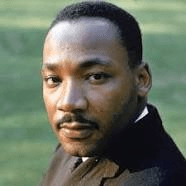 The half-century since the assignation of Dr. King stands as an indictment against American society. An indictment because racism is still alive and well. Fifty years on and we still have systemic racism in housing, education, healthcare, and the judicial system. Don’t pat yourself on the back America; we have achieved little in that time period. In fact, at the end of this half-century, we have just found more people that we can oppress and disenfranchise. The immigrant, and the refugee by closing our borders, refusing to see their plight and their suffering. The LGBTQ community by refusing even to accept their diversity, and treating them as though they had leprosy. Women are seen as objects of sexuality and not equality. Lastly, our children, when their lives are worth less than your right to own the gun of your choice. Grown men and I use that term loosely, stamp their feet like a child in a tantrum when they can’t get their own way.
  Blessed are those who mourn, For they shall be comforted. (Mat 5:4 NKJ)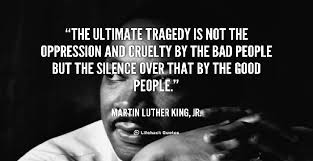
 Blessed are those who mourn, For they shall be comforted. (Mat 5:4 NKJ)
 “Blessed are the poor in spirit, For theirs is the kingdom of heaven. (Mat 5:3 NKJ)
 And seeing the multitudes, He went up on a mountain, and when He was seated His disciples came to Him. Then He opened His mouth and taught them, saying: (Mat 5:1-2 NKJ)
 Two others also, who were criminals, were led away to be put to death with him.… One of the criminals who were hanged there kept deriding him and saying, “Are you not the Messiah? Save yourself and us!” But the other rebuked him, saying, “Do you not fear God, since you are under the same sentence of condemnation? And we indeed have been condemned justly, for we are getting what we deserve for our deeds, but this man has done nothing wrong.” Then he said, “Jesus, remember me when you come into your kingdom.” He replied, “Truly I tell you, today you will be with me in Paradise.” LUKE 23: 32, 39– 43 NIV
 Behold, I tell you a mystery: We shall not all sleep, but we shall all be changed–in a moment, in the twinkling of an eye, at the last trumpet. For the trumpet will sound, and the dead will be raised incorruptible, and we shall be changed. For this corruptible must put on incorruption, and this mortal must put on immortality. So when this corruptible has put on incorruption, and this mortal has put on immortality, then shall be brought to pass the saying that is written: “Death is swallowed up in victory.” “O Death, where is your sting? O Hades, where is your victory?” The sting of death is sin, and the strength of sin is the law. 57 But thanks be to God, who gives us the victory through our Lord Jesus Christ. (1Co 15:51-57 NKJ)
 Then he said to them the third time, “Why, what evil has He done? I have found no reason for death in Him. I will, therefore, chastise Him and let Him go.” But they were insistent, demanding with loud voices that He be crucified. And the voices of these men and of the chief priests prevailed. (Luk 23:22-23 NKJ)
 Then Jesus went about all the cities and villages, teaching in their synagogues, and proclaiming the good news of the kingdom, and curing every disease and every sickness. When he saw the crowds, he had compassion for them, because they were harassed and helpless, like sheep without a shepherd. Then he said to his disciples, “The harvest is plentiful, but the laborers are few; therefore ask the Lord of the harvest to send out laborers into his harvest.” (Matt 9:35-38, NIV)
 Dr. Terry Threadwell's Blog